Is The Worst Yet To Come? Minnesota Wildfire Officials Share Sobering Outlook For Rest Of 2026
This spring and summer have been pretty active across Northern Minnesota for wildfires, but officials are warning we're far from out of the woods on this year's wildfire season.
Late springtime is often when most people tend to think of when they think of wildfire season in Minnesota, before things green up for the summer. That's when a couple of this year's early headline-grabbing wildfires ignited.
The Stewart Trail Fire near Two Harbors closed down Highway 61 for days while crews worked to bring the blaze under control in mid-May. As that fire was being brought under control, the Flanders Fire in Mission Township north of Brainerd erupted to more than 1,700 acres.
A series of lightning strikes and continued drought conditions sparked several fires in and around the Boundary Waters in early July, with more than 69,000 acres being scorched by those fires.
READ MORE: How Do The 2026 BWCAW Wildfires Compare To Other Historic Minnesota Wildfires?
While crews are making progress in containing those BWCAW wildfires, officials with the Minnesota Incident Command System (MNICS) say we're far from being done with the wildfire threat this year.
MNICS is an interagency organization for coordinating response around emergency events like wildfires. They shared an outlook today that projects this year's wildfire season in Minnesota lasting through nearly the end of the year.
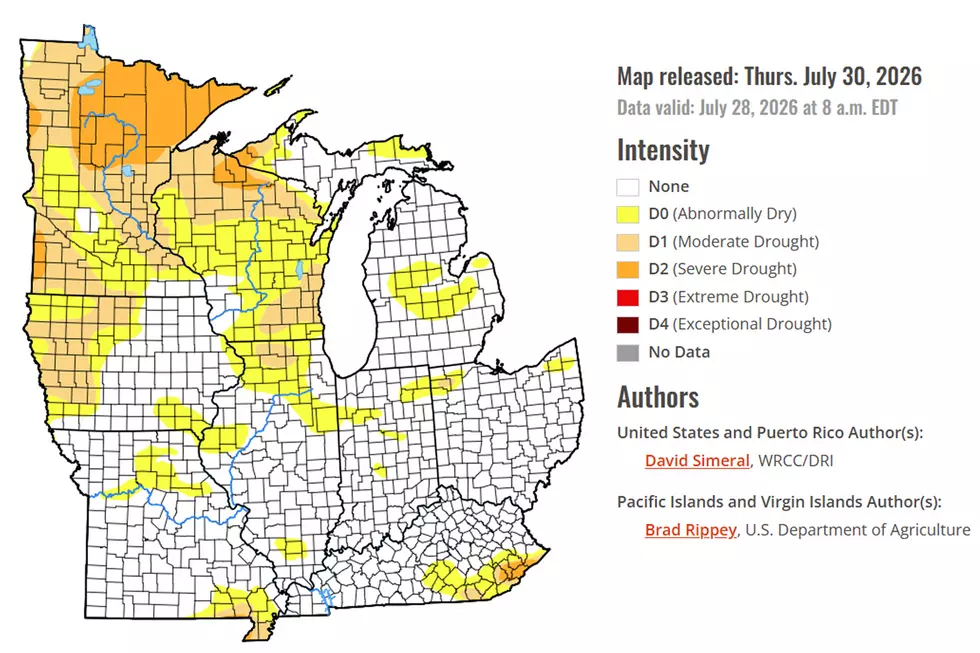
As they pointed out in their message, it has been a hot and dry summer, with drought conditions present across most of the state. The worst area (as seen in the map below) is Northcentral and Northeastern Minnesota, which is in a severe drought right now.
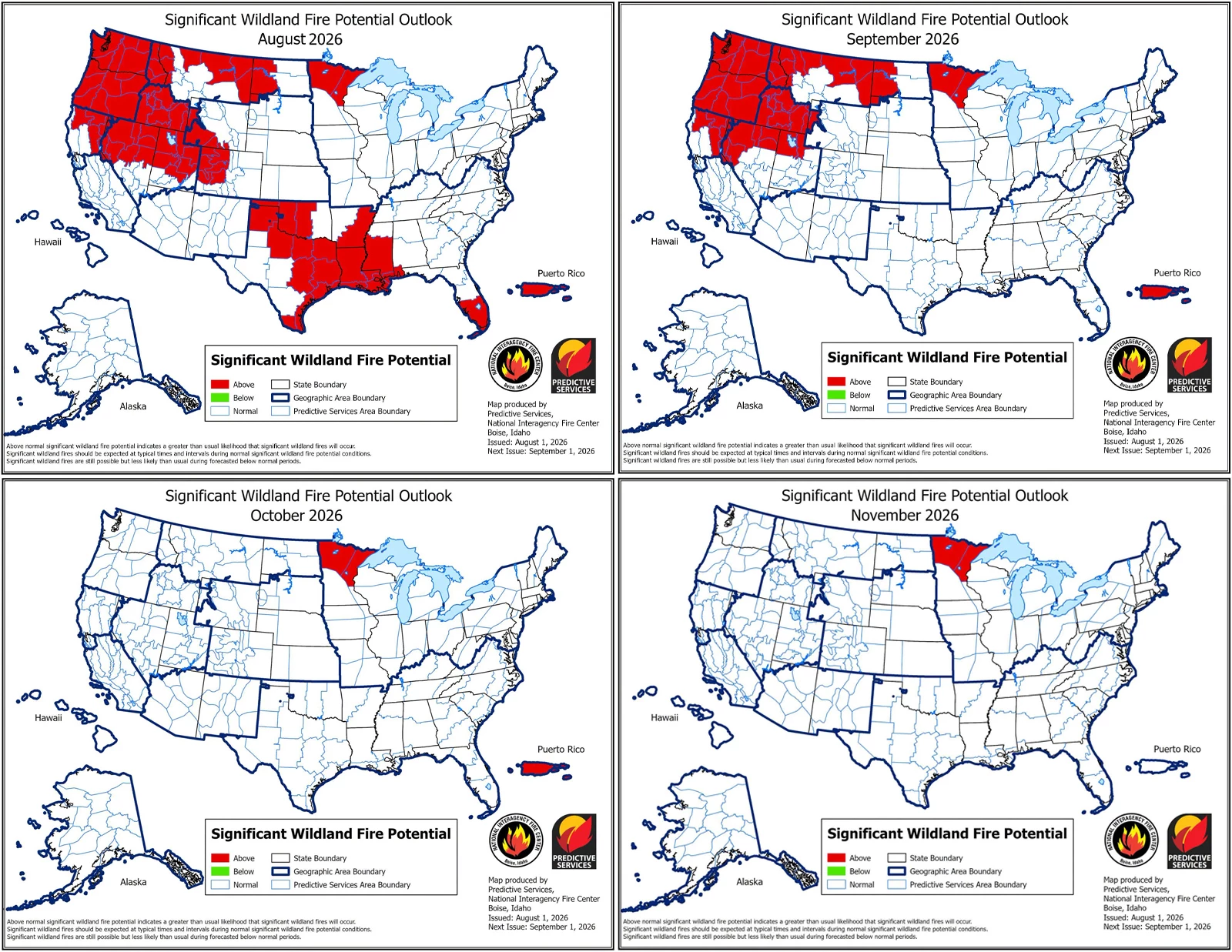
Those ongoing severe drought conditions don't look to be relieved anytime soon, and because of that, the National Interagency Fire Center sees significant wildfire potential in Northern Minnesota in August, September, October, and November, with the hope being that December snow will alleviate those fire risks.

What's sobering about this is that after September, Northern Minnesota is the only place in the mainland United States with that notable wildfire potential, as you can see marked in red on the maps below. That's not good.
MNICS highlights that fall is generally one of Minnesota's most active fire seasons every year, but it could be even worse this year with the drought conditions we're seeing.
They point out that a couple of Minnesota's largest wildfires happened in late summer and fall, including the 2011 Pagami Creek Fire (92,682 acres), the 1894 Hinckley Fire (200,000 acres), and the 1918 Moose Lake and Cloquet Fires (250,000 acres).
I think everyone can agree we all hope history doesn't repeat itself with ongoing tinderbox conditions across Northern Minnesota.
While some wildfires happen due to things like lightning or accidents, MNICS urges everyone across Northern Minnesota to be aware of fire dangers, avoid burning on warm, dry, or windy days, and follow local burning restrictions or bans.
Until we get significant, soaking rain or at least 6 inches of snow sticking on the ground, MNICS says we'll see fire dangers persist.
The Largest Minnesota Wildfires In Modern History
Gallery Credit: Nick Cooper
More From B105


