
Invasive Vine That Threatens Monarch Butterflies Now Found In Wisconsin
Anyone who spends time in the woods and fields of the Midwest knows the fight against invasive species never really ends. Every so often, though, a brand-new threat turns up, and one just landed in northeastern Wisconsin.
The Wisconsin Department of Natural Resources announced on July 7 that it has confirmed the presence of pale swallow-wort (Vincetoxicum rossicum), an invasive vine, in Oconto and Shawano counties.
The plants were found on the outskirts of the town of Krakow, right along the shared county line. According to the DNR, these are the first known populations of the species anywhere in the state, which is exactly why a fast response matters so much.
The sites were first reported by the Timberland Invasives Partnership, a non-profit that tracks invasive species across Langlade, Menominee, Oconto, and Shawano counties, through an online mapping tool called EDDMapS. Those reports were then passed along to the DNR.

Why This Vine Is A Problem
Pale swallow-wort has no tendrils, but it twines its way up and over nearby plants, crowding out native species in both forests and grasslands.
Here is the part that should worry anyone who loves monarch butterflies: the vine belongs to the milkweed family and can outcompete the native milkweed monarchs depend on.
Monarchs have even been seen laying eggs on swallow-wort, but once those eggs hatch, the caterpillars can't survive on it. In other words, it can act like a trap.
Because of that kind of damage, the plant is classified as a prohibited invasive species in Wisconsin. Under the state's Invasive Species Rule, it is against the law to transport, transfer, introduce, or possess it.
How To Spot It And What To Do
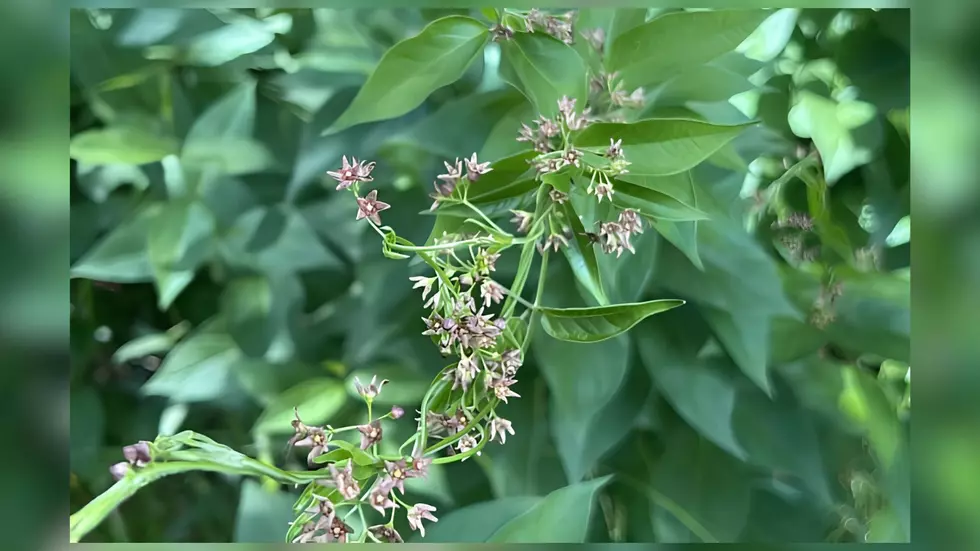
The flowers are the giveaway. Pale swallow-wort produces star-shaped blooms with five petals, clustered where the leaves meet the stem, in a pinkish or light-brown color, with petals that are smooth on top, long and tapered.
Its leaves grow opposite one another, oblong to oval with a pointed tip and smooth edges, and slender, milkweed-like seedpods appear from mid to late summer.
SEE NOW: Wisconsin State Fair Unveils Its Epic 2026 Sporkies, Drinkies Finalists (Photo Gallery)
If you think you have spotted it, the DNR asks that you report it to Invasive.Species@wisconsin.gov with the location and clear photos, or submit it through EDDMapS.
The agency says it is already working with the Timberland Invasives Partnership, local landowners, and other partners to find and control the plant before it can take hold.
It's encouraging that this discovery started with ordinary people paying attention and filing a report, meaning a few sharp eyes can be the difference between stopping an invasive species early and fighting it for decades. If you are out exploring this summer and something looks off, say something.
The 10 Safest Cities In Wisconsin This Year [2026]
Gallery Credit: Lauren Wells
SEE INSIDE: Epic Blockbuster-Themed Barndo In Wisconsin
Gallery Credit: Lauren Wells
More From B105